
- Informations
5 Days Bhutan Tour: Best Short Itinerary for 2027
Discover Bhutan in 5 days with Relax Getaways: explore Thimphu, Punakha, Paro and Tiger’s Nest, with practical tips for a memorable holiday.
- Published
- Updated
- Read time
- 16min
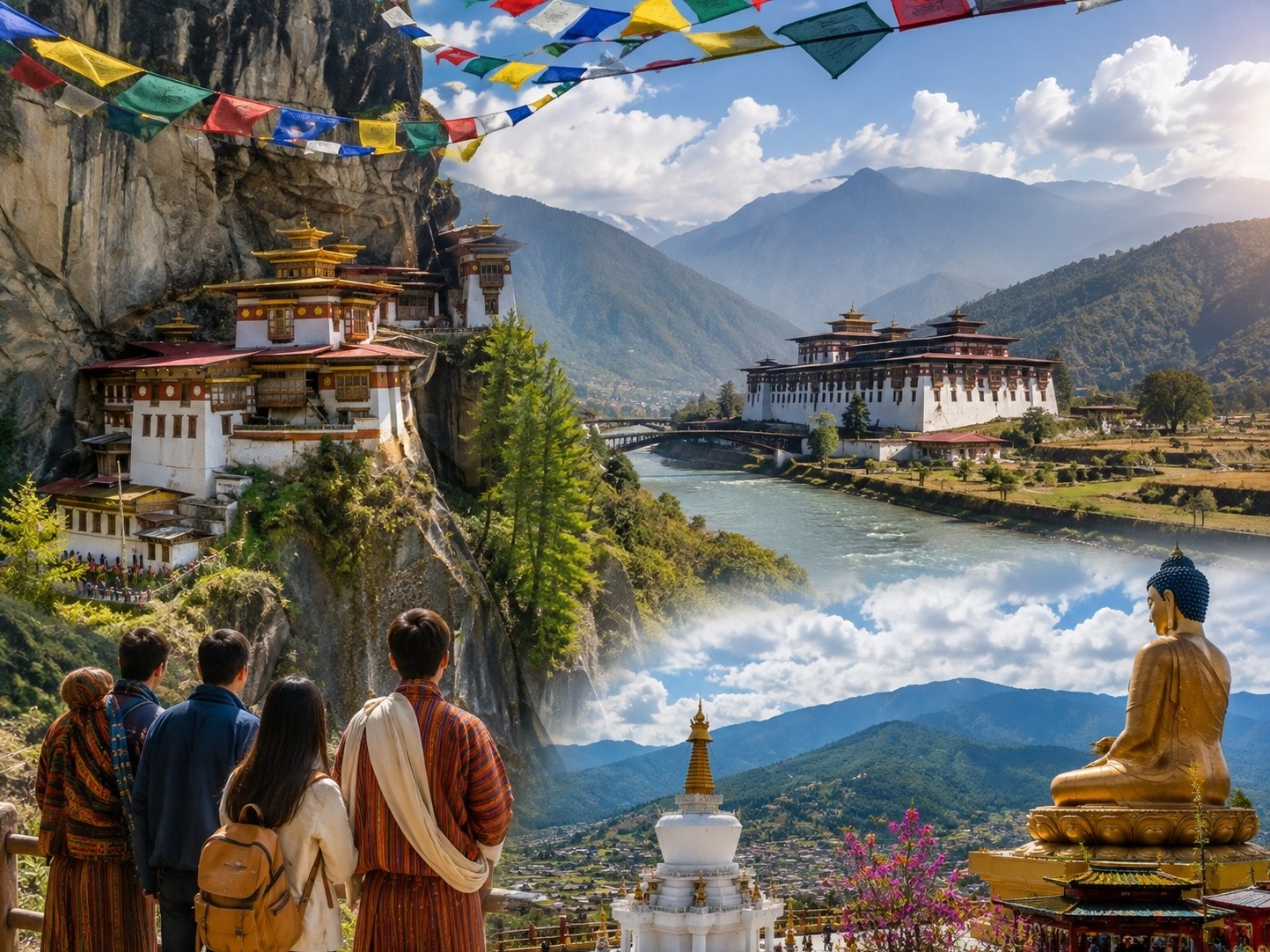
Table of Contents14
Five days in Bhutan can take you from the prayer wheels of Thimphu to the riverside courtyards of Punakha and the forest trail leading to Tiger’s Nest Monastery. Along the way, there are mountain roads, traditional villages, generous meals and small moments that make the journey feel personal: watching worshippers circle a chorten, pausing over a cup of tea, or seeing a familiar monastery photograph become a real place in front of you.
The 5 days Bhutan tour with Relax Getaways brings these experiences together in a four-night journey through western Bhutan. It suits travelers who want a first introduction to the country without committing to a longer holiday, while still making room for its most recognizable hike.
This guide follows our [Magical Bhutan Tour – 5 Days](https://www.relaxgetaways.com/5-days-tour-bhutan-relax-getaways/), with practical advice to help you understand the route, choose your travel dates and prepare for the experience.
Is five days enough to visit Bhutan?
Five days is enough for a rewarding introduction to Thimphu, Punakha and Paro, provided you are comfortable with a fairly active itinerary. You can explore the capital, cross Dochula Pass, visit Punakha’s landmarks and spend a day hiking to Tiger’s Nest.
It is worth being realistic about the pace. Arrival and departure occupy part of two days, and the journey between Punakha and Paro takes several hours. This is a compact cultural holiday with one demanding walk, rather than five full days of leisurely sightseeing.
For travelers with limited annual leave, that balance can work very well. If you prefer late starts, extended photography stops or more time in each valley, consider adding a night or two. Families with younger children and travelers who want fewer hours on the road may also enjoy a longer version of the route.
The 5 Days bhutan tour itinerary at a glance
The journey begins and ends at Paro International Airport. The usual overnight pattern is one night in Thimphu, one in Punakha and two in Paro.
Day | Trip Route and Major Experiences | Overnight |
|---|---|---|
1 | Arrive in Paro Airport; transfer to Thimphu; Settle in | Thimphu |
2 | Thimphu sightseeing; cross Dochula Pass; drive to Punakha | Punakha |
3 | Punakha Dzong, suspension bridge & Chimi Lhakhang; continue to Paro | Paro |
4 | Tiger’s Nest hike; additional Paro sightseeing as time and energy allow | Paro |
5 | Transfer to Paro airport for departure | - |
Flight schedules, road conditions, religious events and monument opening arrangements can affect the order of visits. Your confirmed itinerary sets out the final arrangements.
Day 1: Arrive in Paro and travel to Thimphu
Your Bhutan holiday begins at Paro International airport, where your local team welcomes you before the drive to Thimphu. Allow roughly 1.5–2 hours for the transfer, with extra time if you stop along the way.
This first journey is a chance to slow down after the flight. Look out at the changing valley scenery and let your guide introduce the places you will visit over the next few days. There is no need to fill every minute with a sightseeing stop.
After checking into your hotel, the afternoon or evening depends on your arrival time. An early flight may leave room for a gentle introduction to the capital; a later arrival is better followed by dinner and a restful evening. A short walk can be enjoyable, but avoid building essential visits around an arrival time that could change.
Our planning tip: keep your first day flexible. A comfortable start makes the following morning’s sightseeing more enjoyable.
Day 2: Explore Thimphu and cross Dochula Pass to Punakha
Thimphu introduces the relationship between Bhutan’s everyday life, religious traditions and public institutions. Rather than approaching the city as a checklist, take time to notice how people use its sacred places and how traditional design appears in its buildings.
Memorial Chorten
The Memorial Chorten is a meaningful place to begin. Built in memory of Bhutan’s third king, it remains a place of worship where people walk clockwise, turn prayer wheels and pause for prayer.
Give visitors and worshippers space, and let your guide explain what you are seeing. The experience is often most rewarding when you spend a few quiet minutes observing rather than immediately moving on to the next photograph.
Tashichho Dzong
Tashichho Dzong combines religious and administrative functions. Its courtyards and architectural details offer an introduction to the fortress-monastery buildings you will encounter elsewhere on the route.
Access follows the site’s opening arrangements, which may not suit every sightseeing schedule. Your guide can adjust the order of visits where possible; entry to particular areas should never be assumed.
Folk Heritage Museum
The Folk Heritage Museum adds a different perspective. Its traditional farmhouse setting turns attention toward domestic life, agricultural tools and the practical objects that help explain rural Bhutanese culture.
This is a useful contrast to the larger religious monuments. Ask questions about the objects that catch your attention; ordinary household details can make an unfamiliar way of life easier to understand.
Buddha Point
The package highlights also feature Buddha Dordenma at Kuensel Phodrang, commonly called Buddha Point. The large Buddha statue and elevated setting make it a memorable Thimphu stop. Its placement within your sightseeing depends on the final schedule, so let the team know if it is a particular priority.
Dochula Pass and the journey to Punakha
After sightseeing, continue toward Punakha via Dochula Pass, at approximately 3,100 metres. The drive from Thimphu is around three hours before allowing for extended stops.
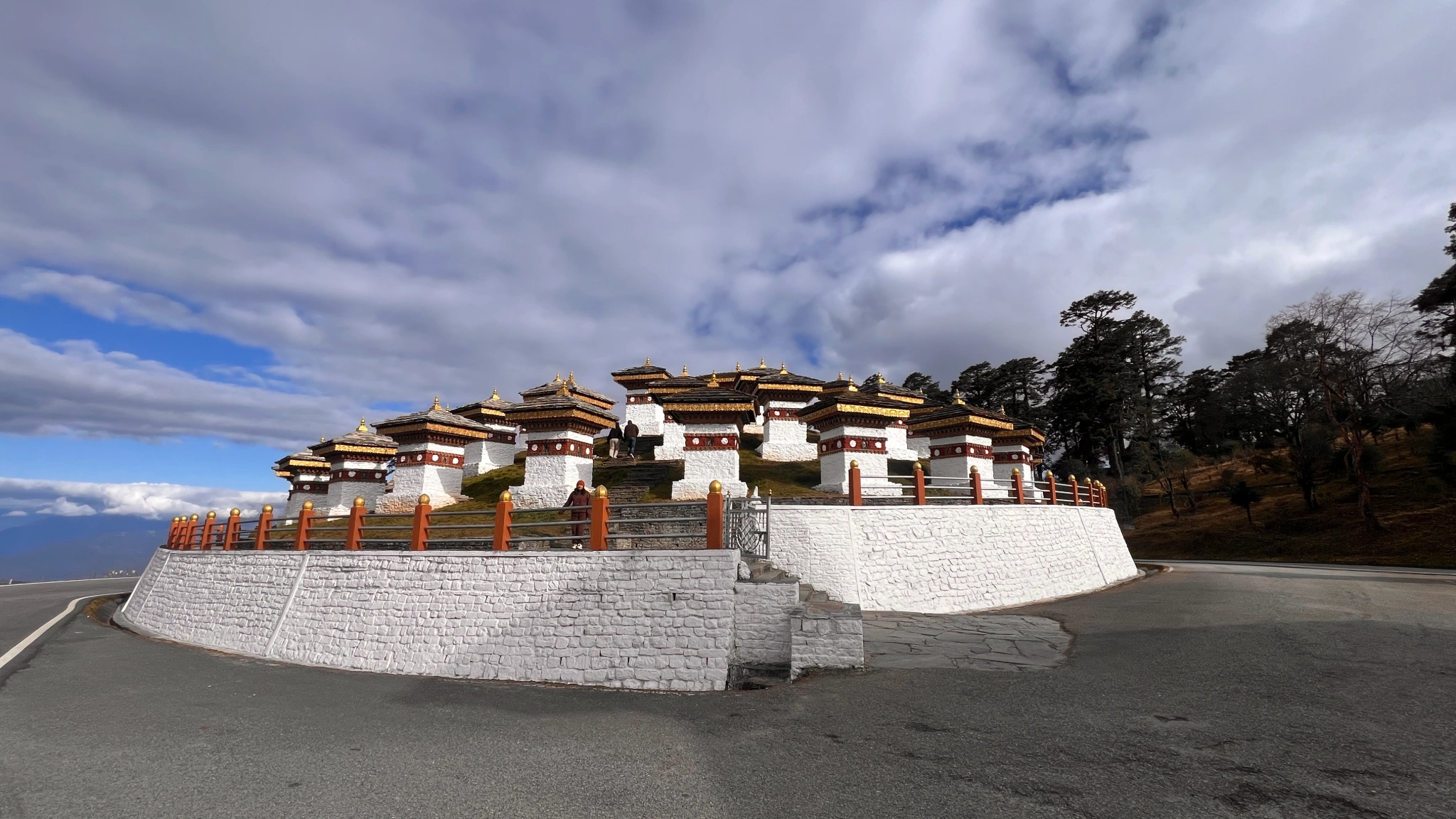
The pass is known for its 108 chortens and, in clear conditions, distant Himalayan views. Even if cloud hides the mountains, the chortens and surrounding landscape make the stop worthwhile. Bring a warm layer: a comfortable temperature in town does not mean it will feel equally warm at the pass.
The road then descends toward Punakha, where you check into your hotel for the night. This is a full sightseeing and transfer day, so a relaxed evening is usually welcome.
Day 3: Discover Punakha before returning to Paro
Punakha brings rivers, cultivated landscapes and one of the journey’s most striking dzongs into the itinerary. Begin early enough to enjoy the morning without making the later drive feel rushed.
Punakha Dzong
Standing where the Pho Chhu and Mo Chhu rivers meet, Punakha Dzong has a setting that deserves more than a quick photo stop. Explore the areas open to visitors with your guide, who can explain the building’s religious and historical significance.
Look closely at the painted details and woodwork, and remember that this remains a working sacred and administrative space. Some areas may be restricted, and ceremonies can change visitor access.
Punakha Suspension Bridge
The suspension bridge provides a different view of the valley. Take your time crossing, especially if movement underfoot makes you uneasy, and keep the path clear for other users.
You do not have to walk the entire bridge to appreciate the setting. Tell your guide if you would prefer a shorter visit or a viewpoint instead.
Chimi Lhakhang
The itinerary also includes Chimi Lhakhang, associated with Drukpa Kunley and traditions surrounding fertility blessings. Your guide can explain the cultural context respectfully and help you understand the symbolism encountered around the temple.
Drive to Paro
Allow approximately 4–5 hours of driving between Punakha and Paro, with sightseeing, meals and breaks adding to the total travel day. An evening arrival is entirely possible; avoid expecting a full additional sightseeing programme after reaching the hotel.
If you feel energetic, a short stroll through Paro town can be a pleasant way to finish the day. Otherwise, enjoy dinner and prepare for tomorrow’s hike.
Day 4: Hike to Tiger’s Nest Monastery
For many travelers, the walk to Paro Taktsang, or Tiger’s Nest Monastery, is the experience they have imagined most. Seeing the monastery against the cliff is memorable, but the walk itself is part of what makes the visit special.
The trail climbs through forest, with opportunities to pause as the views change. A cafeteria provides a useful resting point, while the final approach involves substantial steps. The monastery stands at roughly 3,120 metres, so give yourself permission to walk more slowly than you might at home.
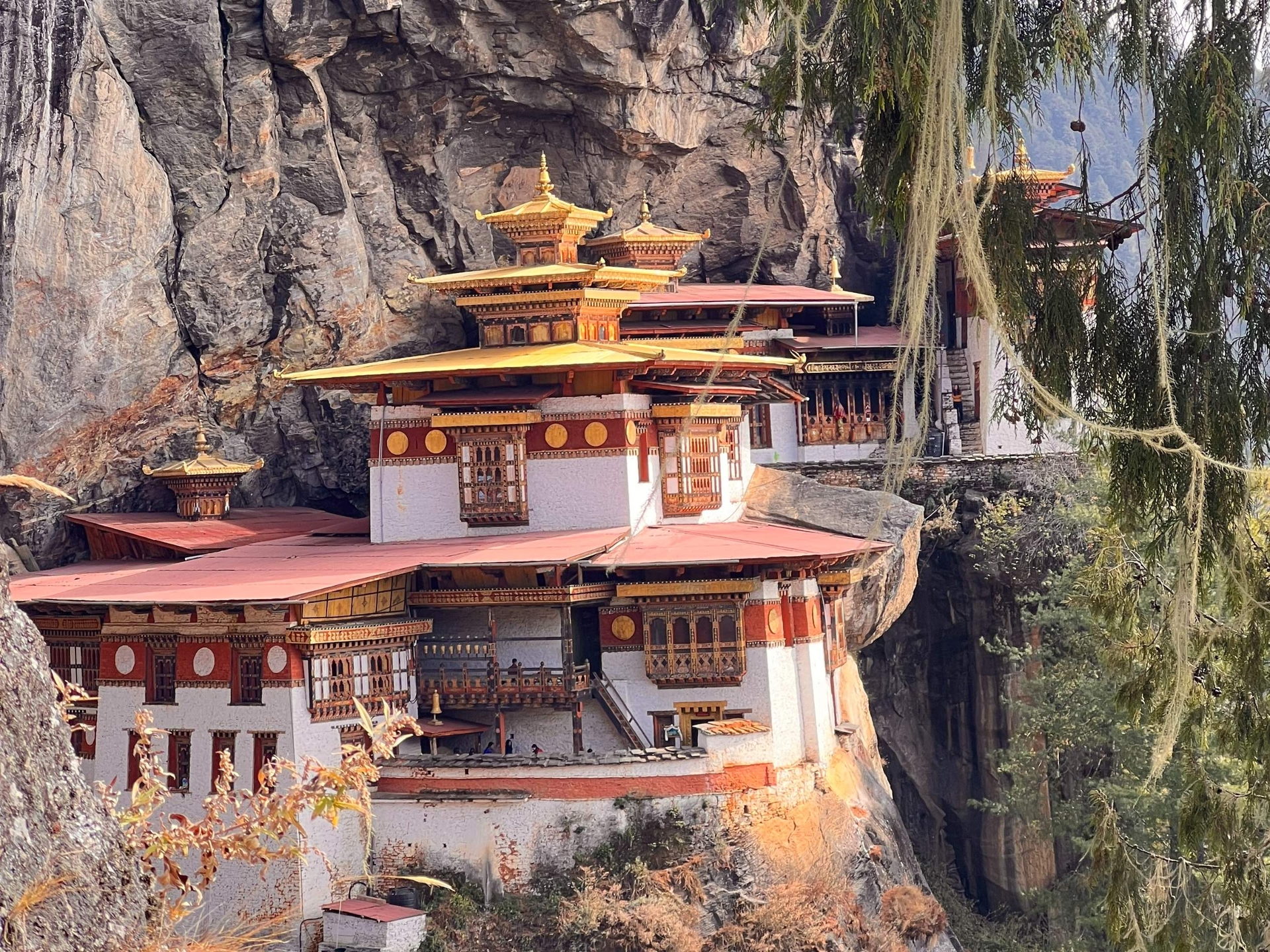
Bhutanese tradition connects the site with Guru Padmasambhava and the story of his arrival on a tigress. Understanding that spiritual significance adds depth to a place often encountered first through photographs. [Bhutan’s Department of Culture and Dzongkha Development](https://dcdd.moha.gov.bt/collection/paro-taktshang/) provides further background on this sacred site.
How difficult is the hike?
Allow approximately 4–6 hours for the return excursion, sometimes longer depending on your pace, breaks and time at the monastery. It is a sustained uphill walk with uneven sections and many steps, rather than a technical climb.
You do not need mountaineering experience, but you should be comfortable walking for several hours. Prepare with regular walks and some uphill or stair practice before traveling. Wear shoes you have already used, carry water and keep your daypack light.
If you have concerns about your fitness or mobility, discuss them with Relax Getaways before booking. A shorter walk to a viewpoint or an alternative Paro activity may be more enjoyable than feeling pressured to complete the entire route. The itinerary should suit the traveler, not the other way around.
Afternoon sightseeing in Paro
After the hike and lunch, additional visits depend on your energy and the remaining time. Kyichu Lhakhang, traditionally dated to the seventh century, offers a quieter temple experience after the physical effort of the morning. Rinpung Dzong is another possible stop when opening arrangements allow.
The package highlights mention the National Museum, but fitting it into a five-day schedule requires careful planning. If it is a priority, ask for it to be specifically included in your confirmed programme rather than assuming every Paro attraction will fit after the hike.
In the evening, browse local shops or return to the hotel for a relaxed dinner. Leave yourself room to enjoy the day rather than turning its final hours into a race.
Day 5: Depart from Paro
After breakfast, your driver and guide arrange the airport transfer according to your flight time. A later departure may leave a little free time, but keep the morning focused on a comfortable departure rather than an essential sightseeing visit.
If you are combining Bhutan with Nepal or another destination, allow a sensible buffer between separate flight bookings. A connection that looks convenient on paper may leave little room for an unexpected delay.
Best time for a 5 days Bhutan tour
Spring and autumn are popular choices for this route. March to May brings seasonal blooms and changing greenery; autumn, particularly October and November, often appeals to travelers hoping for clearer views. Weather still varies, and no month guarantees mountain visibility.
Winter can suit travelers who do not mind cold mornings and evenings. Summer offers green landscapes, but rainfall can affect walking conditions and road journeys. Pack for the season and check the forecast shortly before departure.
If a festival is your main reason for traveling, plan around its confirmed dates and location. Festival attendance may require a revised itinerary or additional nights; it should not simply be added to an already busy day. See [Bhutan’s official travel FAQs](https://bhutan.travel/faqs) for seasonal background.
Bhutan visa requirements
Most international visitors, including Nepali passport holders, need an approved visa before traveling. Indian nationals require a permit, while Bangladeshi and Maldivian nationals have different visa arrangements, including an arrival application option.
Travelers can apply through Bhutan’s official online system or authorize a tour operator to apply on their behalf. The standard visa application fee is US$40, and the official guidance allows up to five working days for review. Submit documents comfortably ahead of departure rather than relying on last-minute processing.
Typical application information includes a passport copy, recent digital photograph and arrival and departure dates. Confirm passport validity requirements for your nationality before booking. Relax Getaways can coordinate the application arrangements included in your quotation. Refer to the [official Bhutan visa guidance](https://bhutan.travel/visa) for current requirements.
Understanding the Sustainable Development Fee
Bhutan’s Sustainable Development Fee (SDF) is separate from the cost of hotels, transport, meals and guiding. A tour quotation may bundle it into the total, but the fee itself does not pay for those individual travel services.
At the time of checking, the standard applicable rate is US$100 per adult per night for most international visitors. For a four-night stay, that means US$400 per adult. Children aged 6–11 pay US$50 per night under the USD rate, while children under six are exempt. Indian adults pay INR 1,200 per night, or INR 4,800 for four nights.
Check whether SDF is included in your written quote before adding it to your budget, so you do not count it twice. Rates and concessions can change; verify the amount for your actual travel dates through the [official SDF information](https://bhutan.travel/faqs).
How much does a 5 days bhutan tour cost?
Your final price depends on the number of travelers, room arrangements, hotel category, dates and any changes to the itinerary. A solo traveler’s private vehicle and room costs are shared differently from those of a couple or small group, so one headline rate cannot describe every booking.
For an accurate comparison, request a written quotation showing:
- Hotel category, room type and four-night accommodation arrangements.
- Private transfers, sightseeing transport and licensed guiding.
- Meals and entrance fees covered by the programme.
- Visa processing and the applicable SDF, clearly identified.
- Flight costs, single-room supplements and optional experiences.
The published package lists accommodation, full-board meals, private transportation, a licensed English-speaking Bhutanese guide, entrance fees and visa processing among its inclusions. International flights, personal travel insurance, tips, personal purchases and optional activities require separate budgeting unless your quote expressly includes them.
Hotel categories vary by the option you book. Ask for the proposed hotel names and substitution arrangements before confirming, particularly if a particular property is important to your holiday.
Food, packing and everyday preparation
Meals are an enjoyable opportunity to explore Bhutanese flavors. Try ema datshi, the familiar chilli-and-cheese dish, alongside rice and other available dishes. If you prefer mild food, mention this before meals rather than assuming every dish can be adjusted once served.
Share dietary requirements and allergies when booking. Clear advance information gives the team time to discuss what kitchens can provide; a general preference and a serious allergy need different preparation.
For packing, focus on versatile clothing and comfortable walking gear:
- Broken-in walking shoes with good grip.
- Light layers, a fleece or warm jacket, and a waterproof outer layer.
- Clothing suitable for religious visits, covering shoulders and knees.
- A small daypack, water bottle, hat, sunglasses and sunscreen.
- Personal medicines, a travel adapter and a power bank.
- Accessible copies of travel documents and booking details.
Keep a little room in your bag rather than packing for every imagined situation. You will move hotels twice before the two-night stay in Paro, so manageable luggage makes the transfers easier.
Respectful travel in Bhutan
Follow your guide’s advice about dress, footwear and access at religious sites. Ask before photographing people, and check before taking photographs inside temples. An open doorway does not necessarily mean a room is open to visitors.
Let worshippers continue their activities without interruption, keep your voice low in sacred spaces and avoid treating ceremonies as performances arranged for tourists. Shopping directly from local craftspeople and taking your litter away are simple ways to travel considerately.
Why travel with Relax Getaways?
A short holiday benefits from thoughtful coordination. Airport transfers, hotel check-ins, sightseeing hours and a long hike all need to fit into the same four-night stay, and small planning decisions can make a noticeable difference to your experience.
With Relax Getaways, you can discuss your preferred hotel standard, interests and walking comfort before your arrangements are finalized. Our role is to bring the practical details together and help you understand what is included, so you arrive with a clear picture of the trip.
Tell us what matters most: extra time for photography, a particular museum, comfortable hotels or a gentler walking schedule. Sometimes the best adjustment is a different order of visits; sometimes it is an additional night.
Frequently asked questions
Does this tour include Thimphu, Punakha and Paro?
Yes. These three destinations form the core route, with arrival and departure through Paro airport. The overnight arrangement is usually one night in Thimphu, one in Punakha and two in Paro.\
Is Tiger’s Nest suitable for a beginner?
A beginner who is comfortable with several hours of uphill walking may enjoy it. Previous trekking experience is less important than realistic expectations, preparation and a steady pace. Discuss mobility or fitness concerns before confirming the itinerary.
Can I skip the hike?
Yes, you can discuss an alternative plan with the team. Confirm the activities, guiding arrangements and any price changes in advance, particularly if other members of your party will still hike.
Can I take this tour from Kathmandu?
The Bhutan programme starts at Paro airport. Travelers beginning in Kathmandu can ask Relax Getaways to help coordinate the flight arrangements, subject to the operating schedule and seat availability. Confirm whether airfare is included in your quotation.
Is it suitable for families and older travelers?
It can be, but consider the winding drives, hotel changes and Tiger’s Nest walk. Share each traveler’s needs before booking. A longer itinerary or adjusted sightseeing may be a better fit for some families.
Can I upgrade the hotels?
Discuss the available accommodation options when requesting your quote. Confirm the actual properties, room categories and availability rather than relying only on a label such as comfort, deluxe or luxury.
Are all the Paro attractions guaranteed after Tiger’s Nest?
No. The hike takes priority that day, and additional visits depend on time, opening arrangements and your pace. If Kyichu Lhakhang, Rinpung Dzong or the National Museum is especially important, ask the team to plan for it explicitly.
Can I extend the holiday?
Yes. Request a revised itinerary with extra nights if you want a slower pace or additional destinations. Extra accommodation, services and applicable visitor fees will be reflected in the revised quote.
Plan your 5 days Bhutan tour holiday
If you want a short journey that combines Bhutan’s western valleys with its best-known monastery hike, this itinerary is a rewarding starting point. The5 key is to give each day enough breathing room and choose arrangements that match your interests and comfort.
Explore our [Magical Bhutan Tour – 5 Days](https://www.relaxgetaways.com/5-days-tour-bhutan-relax-getaways/) and send Relax Getaways your preferred dates, number of travelers, nationality and hotel preference. We can help you shape a practical 5 days bhutan tour through Thimphu, Punakha and Paro.