
- Informations
Everest Base Camp Trek vs Annapurna Base Camp Trek: Which Should You Choose?
Compare the Everest Base Camp trek vs Annapurna Base Camp trek to find out which Himalayan adventure best matches your fitness, available time and travel interests. This guide covers the key differences in altitude, difficulty, duration, cost, mountain scenery, local culture, accommodation and transportation, helping you choose between the high-altitude Everest experience and the diverse landscapes of the Annapurna Sanctuary.
- Published
- Read time
- 27min
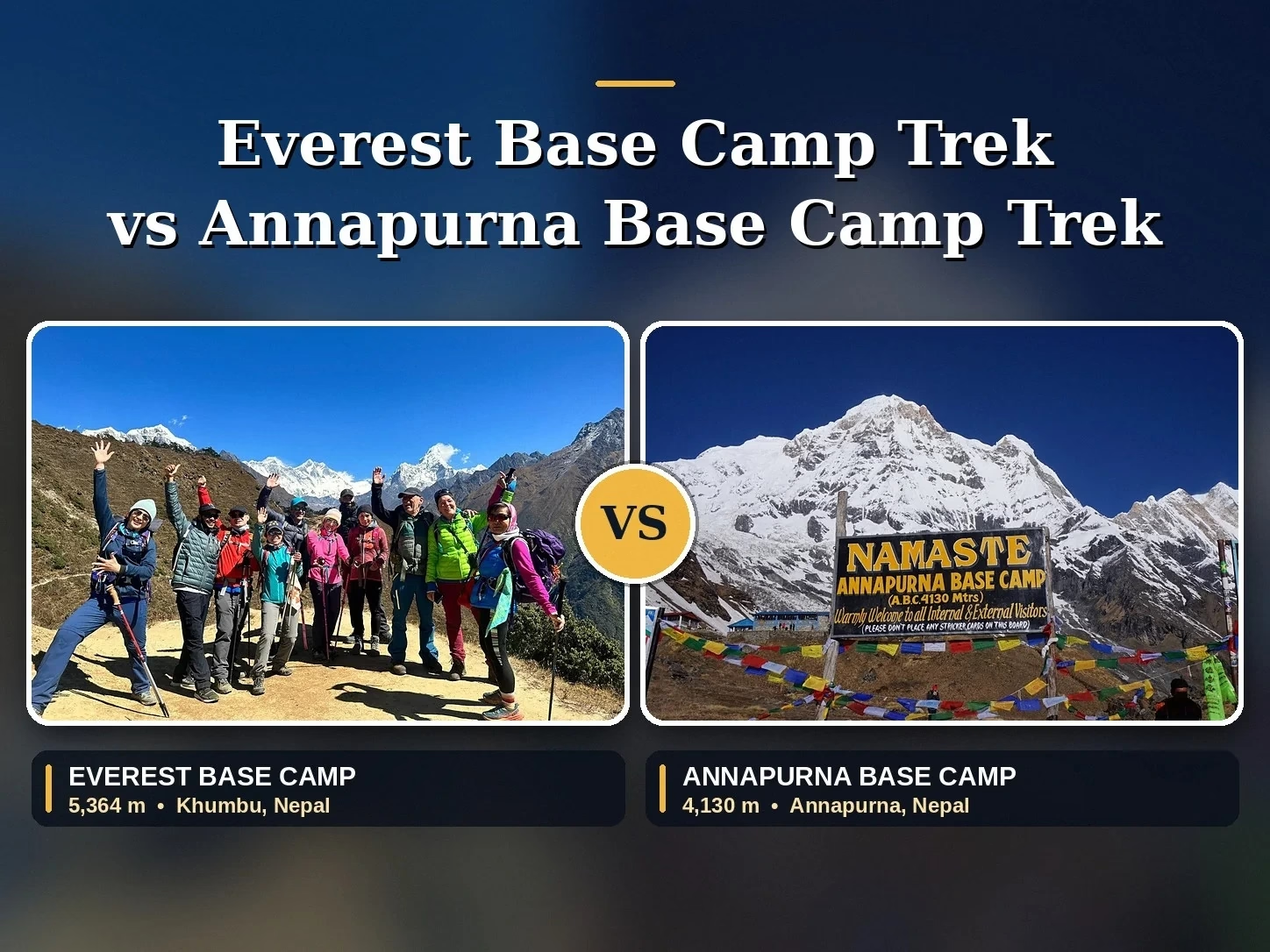
Table of Contents56
Nepal is home to some of the world's most spectacular trekking routes, and two of its most popular adventures are the Everest Base Camp trek and the Annapurna Base Camp trek. Both take you into the heart of the Himalayas, offering dramatic mountain views, traditional villages, and opportunities to experience local culture. However, the two journeys are quite different in terms of altitude, difficulty, duration, accessibility and overall trekking experience.
The Everest Base Camp trek takes you through the Khumbu region, where you follow the footsteps of mountaineers towards the base of Mount Everest. Along the way, you visit Sherpa settlements, cross suspension bridges, explore Buddhist monasteries and walk through increasingly rugged high-altitude landscapes. The journey reaches Everest Base Camp at 5,364 metres and includes an ascent to Kala Patthar at 5,545 metres for panoramic mountain views.
The Annapurna Base Camp trek takes you into the Annapurna Sanctuary, surrounded by some of Nepal's most impressive peaks. The route passes through traditional Gurung and Magar villages, terraced fields, rhododendron forests, bamboo groves and mountain landscapes before reaching Annapurna Base Camp at 4,130 metres.
So, which trek is right for you?
If you want a longer, more demanding high-altitude adventure centred on Mount Everest, the Everest Base Camp trek may be the better choice. If you have less time and prefer a route with diverse landscapes, traditional villages and a lower maximum altitude, Annapurna Base Camp may suit you better.
This guide compares both journeys in detail, including their actual itineraries, trip specifications, mountain scenery, cultural experiences, accommodation, transportation, costs, and trekking seasons.
Everest Base Camp vs Annapurna Base Camp: Quick Comparison
Comparison | Everest Base Camp Trek | Annapurna Base Camp Trek |
Trekking region | Khumbu / Everest region | Annapurna region |
Package duration | 15 days | 9 days |
Difficulty | Strenuous | Difficult |
Highest point | Kala Patthar, 5,545 m | Annapurna Base Camp, 4,130 m |
Everest Base Camp elevation | 5,364 m | Not applicable |
Starting location | Kathmandu, with flight to Lukla | Kathmandu, road journey to Pokhara |
Main transportation | Flight | Tourist bus and private jeep |
Acclimatisation | Two planned acclimatisation days | Gradual ascent with time to rest |
Main mountain views | Everest, Lhotse, Nuptse, Ama Dablam and Pumori | Annapurna I, Annapurna South, Machhapuchhre and Hiunchuli |
Cultural experience | Sherpa communities and Buddhist monasteries | Gurung and Magar communities |
Natural landscapes | River valleys, glaciers, rocky trails and alpine terrain | Forests, waterfalls, terraced fields and alpine landscapes |
Accommodation | Kathmandu hotels and mountain teahouses | Kathmandu and Pokhara hotels, mountain teahouses |
Group size | 2–12 people | 1–12 people |
Advertised starting price | US$1,100 per person | US$990 per person |
Best trekking seasons | Spring and autumn | Spring and autumn |
Note: The comparison uses the advertised package specifications. The displayed starting prices and group-price selections on the package pages differ, so confirm the final quotation before booking. |
Understanding the Everest Base Camp Trek
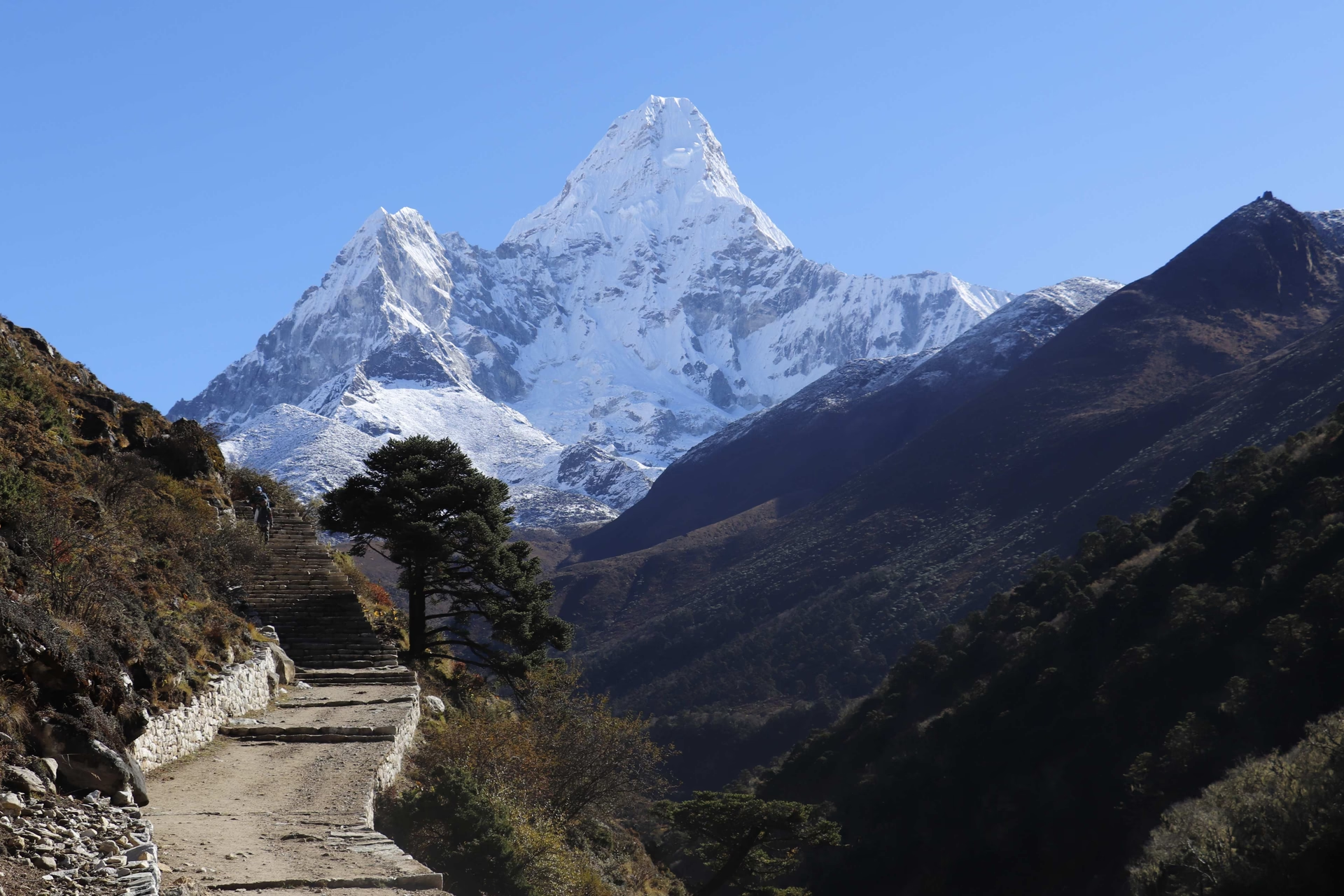
The Everest Base Camp trek is one of Nepal most recognised high-altitude trekking adventures. Located in the Khumbu region of northeastern Nepal, the route takes you through traditional Sherpa settlements, mountain valleys and the spectacular landscape of Sagarmatha National Park.
The 15-day itinerary begins in Kathmandu, where you have time to explore the city before travelling towards the Everest region. From Lukla, the trekking route follows the Dudh Koshi Valley through Phakding and Namche Bazaar before gradually ascending towards Tengboche, Dingboche, Lobuche and Gorak Shep.
The main destination is Everest Base Camp, located at approximately 5,364 metres. However, many trekkers consider the early morning climb to Kala Patthar one of the most rewarding parts of the journey. At 5,545 metres, this viewpoint offers impressive views of Mount Everest and the surrounding Himalayan peaks.
Main Highlights of the Everest Base Camp Trek
Scenic flight to Lukla: The journey begins with a mountain flight to Lukla, situated at approximately 2,860 metres. The flight offers views of Himalayan landscapes and brings you to the starting point of the traditional trekking route.
Namche Bazaar: Often called the gateway to the Everest region, Namche Bazaar is an important Sherpa settlement. It offers mountain views, local shops, cafés, trekking facilities and opportunities to learn about Sherpa culture.
Tengboche Monastery: Located at approximately 3,860 metres, Tengboche is home to one of the most recognised Buddhist monasteries in the Khumbu region. It also provides beautiful views of Ama Dablam and other surrounding peaks.
Sherpa culture and hospitality: The trail passes through traditional Sherpa villages where you can observe local architecture, Buddhist traditions, prayer flags and mountain lifestyles.
Dingboche and Lobuche: These high-altitude settlements introduce you to the more rugged landscapes of the Everest region. Stone-walled fields, yak pastures and dramatic mountain scenery become part of the experience.
Everest Base Camp: Reaching 5,364 metres is the main trekking milestone. The destination is surrounded by glaciers, rocky terrain and towering Himalayan peaks.
Kala Patthar: At 5,545 metres, Kala Patthar provides one of the most impressive viewpoints of Mount Everest. The early morning ascent is especially rewarding when weather conditions allow clear views.
Sagarmatha National Park: The trek passes through this UNESCO World Heritage Site, known for its mountain ecosystems, glaciers, wildlife, and exceptional Himalayan scenery.
Traditional farewell dinner: The itinerary also includes a farewell dinner in Kathmandu with a traditional Nepali cultural programme, providing an opportunity to celebrate the completion of the journey.
Understanding the Annapurna Base Camp Trek
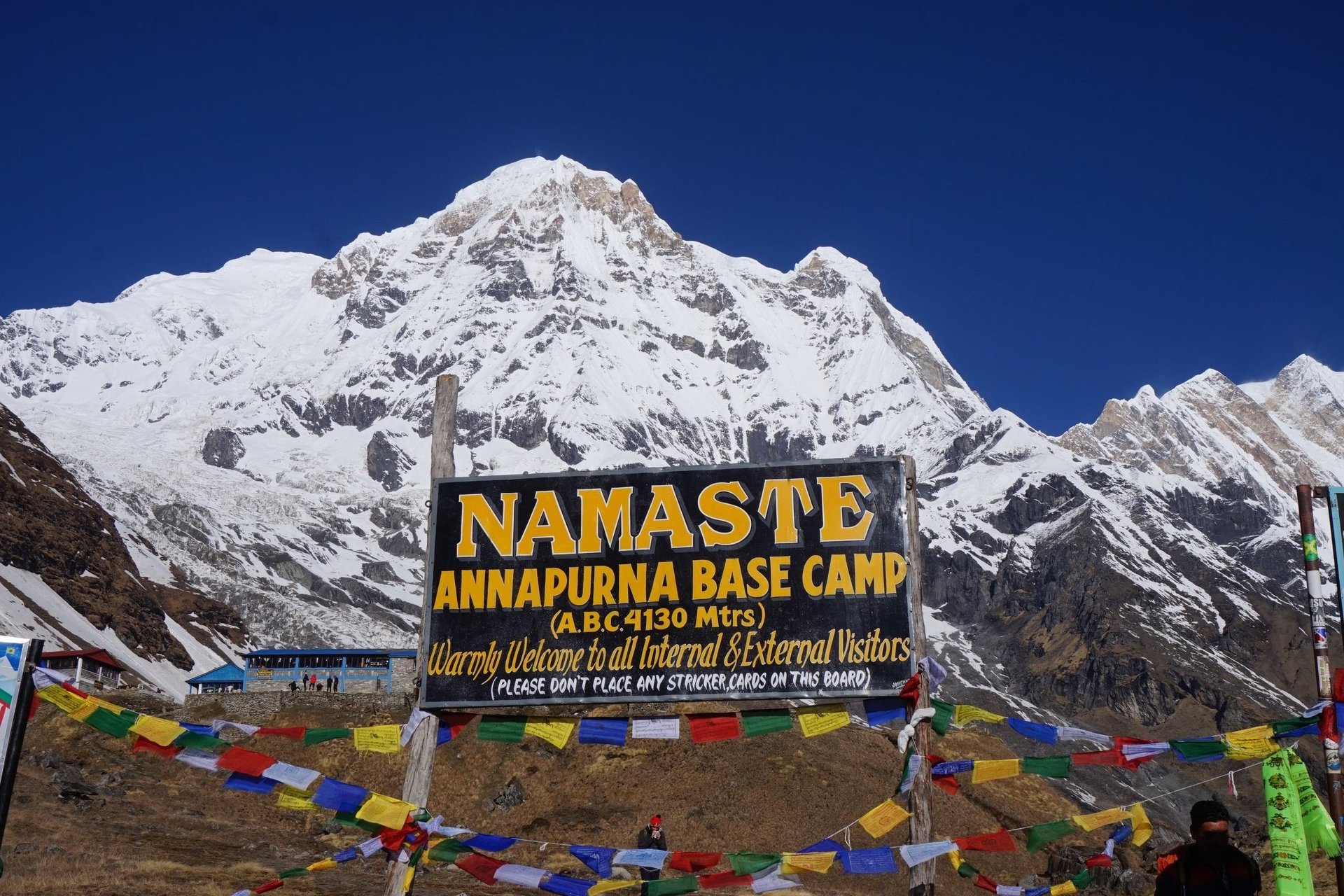
The Annapurna Base Camp trek is a popular Himalayan adventure that takes you into the Annapurna Sanctuary, a natural mountain basin surrounded by impressive snow-covered peaks.
The 9-day itinerary begins in Kathmandu, followed by a scenic road journey to Pokhara. From there, a private jeep takes you towards the trekking starting point near Jhinu Danda.
The walking route continues through Sinuwa, Bamboo, Dovan, Himalaya and Deurali before reaching Machhapuchhre Base Camp and Annapurna Base Camp. Along the way, you experience traditional mountain villages, terraced landscapes, forests and changing mountain scenery.
Annapurna Base Camp sits at approximately 4,130 metres. Unlike the Everest route, the journey reaches its highest point without requiring a climb above 5,000 metres. From the sanctuary, trekkers can enjoy close-up views of Annapurna I, Annapurna South, Machhapuchhre, and surrounding peaks.
Main Highlights of the Annapurna Base Camp Trek
Scenic drive from Kathmandu to Pokhara: The journey begins with a road trip through Nepal countryside, passing rivers, hills, small settlements, and green landscapes.
Traditional Gurung and Magar villages: Ghandruk and Chhomrong are well-known settlements in the Annapurna region. They offer opportunities to experience local hospitality, traditional lifestyles, and mountain culture.
Diverse trekking landscapes: The route passes through terraced fields, rhododendron forests, bamboo groves, river valleys, and alpine terrain. The changing scenery makes each section of the trek distinctive.
Machhapuchhre Base Camp: Located below the famous Fishtail Mountain, this stop offers impressive views of Machhapuchhre, Annapurna South and Hiunchuli.
Annapurna Base Camp: Reaching 4,130 metres is the main highlight of the journey. The sanctuary is surrounded by towering mountain peaks, creating a dramatic natural amphitheatre.
Annapurna Conservation Area: The trekking route passes through a protected region with diverse Himalayan ecosystems, forests, wildlife and seasonal wildflowers.
Rhododendron forests: During spring, rhododendron flowers add colour to the forest sections, creating particularly beautiful scenery.
Jhinu Danda hot springs: The natural hot springs near Jhinu Danda offer an opportunity to relax after several days of walking, depending on the available time and itinerary arrangements.
Mountain sunrise views: Clear mornings can provide beautiful views of the Annapurna range, especially around the higher sections of the sanctuary.
Trip Specifications: Duration, Difficulty, Accommodation and Group Size
Although both treks are located in Nepal, their package specifications show important differences in the time required, difficulty, and travel arrangements.
Everest Base Camp Trek - 15 Days
Trip specification | Details |
Duration | 15 days |
Difficulty | Strenuous |
Maximum altitude | 5,545 m (18,192 ft) |
Destination | Nepal |
Activity | Outdoor adventure |
Listed accommodation | 4-star hotel – Deluxe |
Hotel options | 3-star, 4-star and 5-star selections |
Best season listed | October–November / March–June |
Group size | 2–12 people |
Transport | Flight |
Meals specification | Breakfast |
Advertised starting price | US$1,100 per person |
The Everest itinerary includes two planned acclimatisation days, one in Namche Bazaar and another in Dingboche. These stops are important because the route reaches considerably higher elevations than the Annapurna trek.
Accommodation changes throughout the journey. You stay in a hotel in Kathmandu and use mountain lodges or teahouses during the trekking section. Facilities become more basic at higher elevations.
Annapurna Base Camp Trek - 9 Days
Trip specification | Details |
Duration | 9 days |
Difficulty | Difficult |
Maximum altitude | 4,130 m (13,550 ft) |
Destination | Nepal |
Activity | Outdoor adventure |
Listed accommodation | 4-star hotel – Deluxe |
Hotel options | 3-star, 4-star and 5-star selections |
Best season listed | October–November / March–June |
Group size | 1–12 people |
Transport | Bus |
Meals specification | Breakfast |
Advertised starting price | US$990 per person |
The Annapurna itinerary is shorter and uses road transportation between Kathmandu, Pokhara and the trekking area. The walking section includes mountain teahouses and lodges, with hotel accommodation in the cities.
Which package offers more time for acclimatisation? The Everest itinerary specifically includes two designated acclimatisation days. The Annapurna itinerary has a lower maximum altitude, but gradual ascent and attention to altitude symptoms remain important. |
Everest Base Camp vs Annapurna Base Camp: Detailed Itinerary Comparison
One of the biggest differences between these journeys is how the days are organised. The Everest itinerary includes additional time for sightseeing, acclimatisation, and the return journey from the high mountains. The Annapurna itinerary is more compact, with a shorter approach to the sanctuary and a quicker return to the cities.
Everest Base Camp Trek: 15-Day Route
The 15-day itinerary follows this general schedule:
Day | Main activity | Key location or altitude |
Day 1 | Arrival in Kathmandu, hotel transfer and pre-trip meeting | Kathmandu, approximately 1,340 m |
Day 2 | Guided Kathmandu sightseeing | Swayambhunath, Pashupatinath, Boudhanath and Patan Durbar Square |
Day 3 | Flight to Lukla and trek to Phakding | Phakding, 2,610 m |
Day 4 | Trek from Phakding to Namche Bazaar | Namche Bazaar, 3,440 m |
Day 5 | Acclimatisation hike and exploration | Namche Bazaar |
Day 6 | Trek to Tengboche | Tengboche, 3,860 m |
Day 7 | Trek to Dingboche | Dingboche, 4,410 m |
Day 8 | Acclimatisation hike and rest | Dingboche, 4,410 m |
Day 9 | Trek to Lobuche | Lobuche, 4,910 m |
Day 10 | Trek to Gorak Shep and visit Everest Base Camp | Everest Base Camp, 5,364 m |
Day 11 | Early morning Kala Patthar ascent and trek to Pheriche | Kala Patthar, 5,545 m |
Day 12 | Trek back towards Namche Bazaar | Namche Bazaar, 3,440 m |
Day 13 | Trek from Namche Bazaar to Lukla | Lukla, 2,860 m |
Day 14 | Flight from Lukla to Kathmandu | Kathmandu, approximately 1,340 m |
Day 15 | Departure from Kathmandu | Tribhuvan International Airport |
The first two days provide time to settle in and explore Kathmandu before the mountain journey begins. After arriving in Lukla, the route follows the Dudh Koshi Valley and gradually climbs towards Namche Bazaar.
The two acclimatisation days are important parts of the itinerary. From Dingboche, the trail continues towards Lobuche and Gorak Shep before reaching Everest Base Camp. The following morning, trekkers climb Kala Patthar before beginning the return journey.
Annapurna Base Camp Trek: 9-Day Route
The Annapurna itinerary follows a shorter route:
Day | Main activity | Key location or altitude |
Day 1 | Arrival in Kathmandu, hotel transfer and pre-trip meeting | Kathmandu, approximately 1,350 m |
Day 2 | Scenic drive from Kathmandu to Pokhara | Pokhara, approximately 825 m |
Day 3 | Jeep transfer towards Jhinu Danda and trek to Sinuwa | Sinuwa, approximately 2,340 m |
Day 4 | Trek through Bamboo, Dovan and Himalaya to Deurali | Deurali, approximately 3,230 m |
Day 5 | Trek to Machhapuchhre Base Camp and Annapurna Base Camp | Annapurna Base Camp, 4,130 m |
Day 6 | Sunrise views and descent towards Sinuwa | Sinuwa, approximately 2,340 m |
Day 7 | Trek towards Jhinu Danda and return to Pokhara | Pokhara, approximately 825 m |
Day 8 | Optional Pokhara sightseeing and return journey to Kathmandu | Kathmandu, approximately 1,350 m |
Day 9 | Departure from Kathmandu | Tribhuvan International Airport |
The journey begins with a scenic road trip to Pokhara. From there, a jeep transfer takes you towards Jhinu Danda, where the walking section begins.
The route climbs through Sinuwa, Bamboo, Dovan, and Deurali before reaching Machhapuchhre Base Camp. From there, trekkers continue into the Annapurna Sanctuary and reach Annapurna Base Camp.
After enjoying the mountain views, the route descends through the same general trail towards Sinuwa and Jhinu Danda. The journey then returns to Pokhara before continuing to Kathmandu.
Important itinerary note: The package page has a few inconsistent descriptions in its day-by-day text, particularly around the Day 6 overnight stop and the Day 8–9 return journey. The table above presents the overall nine-day route based on the listed day headings and trip duration. Confirm the final departure itinerary before booking. |
Altitude Comparison: 5,545 m vs 4,130 m
Altitude is one of the most important factors when comparing these two treks.
The Everest Base Camp trek reaches approximately 5,364 metres at the base camp itself. The itinerary then includes an early morning climb to Kala Patthar, reaching 5,545 metres. This makes it a significantly higher-altitude journey than Annapurna Base Camp.
The Annapurna Base Camp trek reaches approximately 4,130 metres. Although this is lower than the Everest route, it is still high enough for trekkers to experience altitude-related symptoms.
Key Altitude Points
Location | Elevation |
Kathmandu | Approximately 1,340–1,350 m |
Lukla | 2,860 m |
Namche Bazaar | 3,440 m |
Tengboche | 3,860 m |
Dingboche | 4,410 m |
Lobuche | 4,910 m |
Gorak Shep | 5,164 m |
Everest Base Camp | 5,364 m |
Kala Patthar | 5,545 m |
Pokhara | Approximately 825 m |
Deurali | Approximately 3,230 m |
Machhapuchhre Base Camp | Above 3,700 m |
Annapurna Base Camp | 4,130 m |
As elevation increases, the amount of available oxygen decreases. This can make ordinary activities such as walking uphill, climbing stairs, and sleeping more difficult.
Acute mountain sickness (AMS) is a concern on both routes. Common symptoms include headache, nausea, dizziness, fatigue, and difficulty sleeping. The risk is generally greater on the Everest route because of its higher elevation, but Annapurna trekkers should also take altitude seriously.
Follow a gradual ascent, listen to your guide, stay hydrated, and report any symptoms. Severe symptoms require prompt medical attention and descent.
Which trek has the greater altitude challenge? Everest Base Camp is considerably higher, reaching 5,545 metres at Kala Patthar, compared with 4,130 metres at Annapurna Base Camp. |
Which Trek Is More Difficult?
Both treks are physically demanding, but the challenges are different.
Everest Base Camp Trek Difficulty
The Everest Base Camp trek is rated strenuous in the package specifications. Its difficulty comes from the combination of long walking days, high altitude, steep ascents, cold temperatures, and a longer itinerary.
The trail gradually climbs from Lukla towards the high settlements of the Khumbu region. As you move beyond Namche Bazaar, the landscape becomes more exposed and rocky, with thinner air and colder conditions.
The most demanding sections include the ascent towards Namche Bazaar, the climb to Tengboche, the higher trail towards Lobuche, and the long walking day to Everest Base Camp. The early morning climb to Kala Patthar is another physically demanding part of the journey.
Two acclimatisation days help prepare trekkers for the higher sections, but they don't eliminate the risk of altitude sickness.
Annapurna Base Camp Trek Difficulty
The Annapurna Base Camp trek is rated difficult. It reaches a lower maximum altitude, but the walking route includes steep stone staircases, uphill climbs, downhill sections, and several consecutive trekking days.
The ascent from Jhinu Danda towards Chhomrong and Sinuwa can be tiring. Further along, the route passes through forests and narrow mountain trails before reaching Deurali and the higher sanctuary.
The section between Deurali, Machhapuchhre Base Camp, and Annapurna Base Camp is particularly important because of the increasing altitude and changing terrain.
The return journey also involves long downhill sections, which can put pressure on the knees.
Which trek is harder? Everest Base Camp is generally more demanding because of its higher altitude and longer duration. Annapurna Base Camp is also challenging, particularly because of its steep staircases and continuous elevation changes. |
Mountain Views and Natural Scenery
Both treks offer impressive Himalayan scenery, but the mountain landscapes and natural environments are different.
Everest Base Camp: Glaciers and High Himalayan Peaks
The Everest region is known for its dramatic high-altitude landscapes. The route begins with river valleys and forested trails before moving into open mountain terrain, rocky valleys, and glacial landscapes.
Some of the major peaks visible along the route include:
Mount Everest
Lhotse
Nuptse
Ama Dablam
Thamserku
Pumori
Lobuche East and West
The views around Namche Bazaar and Tengboche are particularly impressive. As the trail moves towards Dingboche and Lobuche, the surrounding landscape becomes increasingly rugged.
The Khumbu Glacier and the rocky surroundings of Gorak Shep create a distinctive high-altitude environment. Kala Patthar is one of the best places along the route to appreciate the scale of Mount Everest and its neighbouring peaks.
Annapurna Base Camp: Forests and a Mountain Sanctuary
The Annapurna route offers a greater variety of landscapes throughout a shorter journey.
Lower sections include terraced farmland, traditional villages, rivers and green hillsides. As you climb higher, the trail passes through rhododendron forests, bamboo groves and alpine vegetation.
The mountain scenery becomes more dramatic around Machhapuchhre Base Camp and Annapurna Base Camp.
Major peaks include:
Annapurna I
Annapurna South
Machhapuchhre (Fishtail Mountain)
Hiunchuli
Gangapurna
At Annapurna Base Camp, the surrounding peaks form a natural amphitheatre. This close-up mountain setting is one of the most memorable features of the trek.
Which trek has better scenery? Everest Base Camp is ideal for glaciers, dramatic high-altitude terrain, and Everest views. Annapurna Base Camp is better for travellers who enjoy changing landscapes, forests, traditional villages, and a mountain sanctuary. |
Culture and Local Experiences
The cultural experience is another important difference between these routes.
Sherpa Culture in the Everest Region
The Everest Base Camp trek passes through traditional Sherpa settlements, where Tibetan Buddhist traditions are closely connected with daily life.
Namche Bazaar is the main trading centre of the Khumbu region. It is an important stop for trekkers and provides opportunities to explore local shops, cafés, and cultural attractions.
Tengboche Monastery is another important cultural highlight. The monastery is surrounded by mountain scenery and provides insight into Buddhist traditions in the region.
Along the route, you may see prayer flags, prayer wheels, mani walls, and traditional stone houses. These cultural features reflect the long-standing relationship between local communities and the mountains.
Gurung and Magar Culture in the Annapurna Region
The Annapurna Base Camp route passes through villages with strong Gurung and Magar cultural traditions.
Ghandruk is one of the well-known Gurung settlements in the Annapurna region. Chhomrong is another important village along the trekking route, offering mountain views and traditional hospitality.
The villages provide opportunities to learn about local lifestyles, farming practices, architecture, and customs.
Which trek offers a stronger cultural experience? Everest Base Camp is especially known for Sherpa culture and Buddhist monasteries, while Annapurna Base Camp offers more direct experiences of Gurung and Magar village life. |
Transportation and Accessibility
Transportation is another major difference between the two journeys.
Getting to Everest Base Camp
The traditional Everest Base Camp route starts with a flight from Kathmandu to Lukla. The flight takes approximately 25 minutes and provides a scenic introduction to the Khumbu region.
Flights to Lukla are weather-dependent. Poor visibility, wind, and changing mountain conditions can cause delays or cancellations. Travellers should keep some flexibility in their schedules, especially for the return journey.
The package lists flight transportation, while its cost-details section also describes helicopter transportation between Kathmandu and Lukla. These descriptions should be confirmed with the operator before booking so that the actual transport arrangement is clear.
Getting to Annapurna Base Camp
The Annapurna Base Camp itinerary uses road transportation. The journey begins with a tourist bus from Kathmandu to Pokhara, covering approximately 200–220 kilometres depending on the route.
The drive generally takes around 6–7 hours, although traffic and road conditions can affect travel time.
From Pokhara, a private jeep transfers trekkers towards Jhinu Danda and the trekking starting area. After completing the walking section, the route returns towards Pokhara before the journey back to Kathmandu.
Which trek is easier to access? Annapurna Base Camp is generally more accessible by road, while the traditional Everest Base Camp route depends on a flight to Lukla. |
Accommodation and Food During the Treks
Accommodation and meals are important considerations, especially when spending several days in mountain regions.
Accommodation on the Everest Base Camp Trek
The Everest package lists deluxe hotel accommodation in Kathmandu, with 3-star, 4-star and 5-star travel-style options.
During the trek, accommodation is provided in mountain guesthouses, lodges and family-run teahouses. Facilities are generally more basic at higher elevations, particularly around Lobuche and Gorak Shep.
Rooms are usually simple, and shared bathrooms may be available in some locations. Heating is generally limited, so warm sleeping arrangements and suitable clothing are important.
Accommodation on the Annapurna Base Camp Trek
The Annapurna package also lists deluxe hotel accommodation, with different hotel-category options.
The itinerary includes hotel stays in Kathmandu and Pokhara, while mountain accommodation is provided in local teahouses and lodges.
Facilities vary between villages. Lower settlements generally have more accommodation options, while higher locations have simpler rooms and fewer facilities.
Food and Meals
Both package pages list breakfast under their trip specifications. Their inclusion sections also describe breakfast at hotels and trekking accommodation, along with a farewell dinner in Kathmandu.
Common food options in the trekking regions include:
Dal bhat
Rice and vegetable dishes
Noodles
Soups
Potatoes
Eggs
Pasta
Tea and other hot drinks
Meal availability can vary depending on the village and altitude. It is important to check the final package inclusions for lunch, dinner, and drinks during the trek rather than assuming all meals are covered.
Which trek offers better accommodation? Both routes use hotels in the cities and basic mountain teahouses during trekking. Comfort depends on the selected hotel category and the facilities available at each mountain stop. |
Cost Comparison: Which Trek Is More Affordable?
The cost of a Himalayan trek depends on several factors, including duration, group size, accommodation category, transportation, permits, guide and porter services, and meals.
The advertised starting prices on the two package pages are:
Cost detail | Everest Base Camp | Annapurna Base Camp |
Advertised starting price | US$1,100 | US$990 |
Listed group size | 2–12 | 1–12 |
Duration | 15 days | 9 days |
Main transport | Flight | Tourist bus and private jeep |
Annapurna Base Camp generally has a lower overall travel cost because it is shorter and uses road transportation from Kathmandu through Pokhara.
Everest Base Camp usually requires a higher budget because of its longer itinerary, mountain flights, additional acclimatisation days, and high-altitude logistics.
However, the displayed prices should be treated as starting references rather than fixed quotations. The package pages show different prices in their group-pricing and traveller-selection sections. The final amount may also change depending on the selected hotel category and travel arrangements.
Before confirming either trek, check whether the quotation includes:
Airport transfers
Domestic flights or road transportation
Accommodation in Kathmandu and other cities
Mountain teahouse accommodation
Trekking permits and entry fees
Guide and porter services
Guide and porter insurance and expenses
Meals during the trek
Sleeping bags and trekking equipment, where specified
Government taxes and official expenses
What Is Not Included?
The package pages list several personal and travel expenses separately. These include:
International flights
Nepal tourist visa
Personal travel insurance
Personal expenses such as laundry, phone bills, and data
Lunch and dinner in Kathmandu and in Pokhara for the Annapurna package
Single-room supplements
Optional activities
Tips for guides and drivers
Which trek is cheaper? Annapurna Base Camp is generally the more affordable option. However, compare the final package quotations and inclusions before making a decision. |
Best Time to Trek Everest Base Camp vs Annapurna Base Camp
Both treks can be undertaken during different seasons, but spring and autumn generally offer the most favourable conditions.
Spring: March to May
Spring is one of the most popular trekking seasons in Nepal.
In the Annapurna region, rhododendron forests begin to bloom, creating colourful landscapes along the trail. Temperatures are generally more comfortable during the day, although nights can remain cold at higher elevations.
The Everest region also offers good trekking opportunities during spring. Clear mornings can provide excellent mountain views, although weather conditions may change quickly at higher elevations.
Autumn: September to November
Autumn is another excellent season for both routes. After the monsoon, the atmosphere often becomes clearer, providing good visibility of the mountains.
October and November are especially popular because of their generally pleasant daytime temperatures and favourable trekking conditions.
The Annapurna region also offers an opportunity to experience local festivals during the autumn season.
Winter: December to February
Winter trekking is possible on both routes, but temperatures become much colder at higher elevations.
Snowfall can affect trails, particularly around the Everest region and the higher parts of the Annapurna Sanctuary. Some accommodation facilities may have limited availability.
Winter is generally more suitable for experienced trekkers who are properly equipped for cold conditions.
Monsoon: June to August
The monsoon season brings heavy rainfall to many parts of Nepal.
In the Annapurna region, trails can become slippery, leeches may be present, and cloudy conditions can limit mountain visibility. Landslides may also affect road access.
The Everest region receives less monsoon rainfall in some areas, but flights and trail conditions can still be affected by weather.
Which Season Should You Choose? For most trekkers, spring (March–May) and autumn (September–November) are the preferred seasons for both routes. April, October and November are popular choices for travellers seeking good mountain visibility and generally favourable conditions. |
Which Trek Is Better for Beginners?
Neither trek should be considered an easy walk. Both involve multiple days of walking, uphill sections, changing weather, and the physical demands of mountain environments.
However, Annapurna Base Camp is often a more approachable choice for first-time multi-day trekkers because it has a lower maximum altitude and a shorter itinerary.
The route still includes steep stone staircases, long walking days, and significant elevation changes. A reasonable level of fitness is important.
Everest Base Camp is more suitable for travellers who are prepared for a longer, higher-altitude adventure. Previous trekking experience can be helpful, especially when dealing with consecutive walking days and colder conditions.
Before either trek, prepare with regular walking, uphill hiking, stair climbing, and cardiovascular exercise. Choose a suitable itinerary and follow your guide's advice about pace and acclimatisation.
Which trek is better for beginners? Annapurna Base Camp is generally more approachable for first-time trekkers, but it still requires preparation and should not be underestimated. |
Which Trek Should You Choose?
The best route depends on your available time, physical preparation, budget, and the type of Himalayan experience you want.
Choose Everest Base Camp If:
Reaching the base of Mount Everest is one of your travel goals.
You want to experience Sherpa culture and Buddhist monasteries.
You enjoy dramatic glaciers, rocky mountain trails, and high-altitude scenery.
You have approximately two weeks available for the journey.
You are prepared for a strenuous trek and higher elevations.
You want to climb Kala Patthar for panoramic views of Everest.
The Everest Base Camp Trek – 15 Days follows a classic Khumbu route with two planned acclimatisation days, a visit to Everest Base Camp and an early morning ascent to Kala Patthar.
Choose Annapurna Base Camp If:
You have less time for a trekking holiday.
You want to explore a beautiful Himalayan sanctuary.
You prefer a lower maximum altitude than the Everest route.
You enjoy forests, rivers, waterfalls, and traditional mountain villages.
You want to experience Gurung and Magar culture.
You prefer road transportation through Pokhara.
The Annapurna Base Camp Trek – 9 Days combines scenic road travel, traditional villages, and forest trails before reaching the Annapurna Sanctuary at 4,130 metres.
Is There a Shorter Way to Experience Everest?
Not every traveller has enough time for a traditional 15-day Everest Base Camp trek. If you want to experience the Everest region but have a shorter holiday, a helicopter-return trekking itinerary may be worth considering.
This type of itinerary combines high-altitude walking with a helicopter flight for part of the return journey. It reduces the time spent walking back but does not remove the physical demands of the ascent or the need for proper acclimatisation.
The Luxury Everest Base Camp Trek with Helicopter Return is a 10-day alternative that combines trekking with a scenic helicopter return. It remains a strenuous high-altitude adventure rather than an easy sightseeing trip.
Can You Complete Both Everest Base Camp and Annapurna Base Camp in One Trip?
Yes, you can complete both treks during one visit to Nepal, but you will need several weeks and enough time for rest between the journeys.
The Everest Base Camp trek takes around 15 days in the itinerary discussed here, while the Annapurna Base Camp trek takes 9 days. Combining them requires additional time for transportation, recovery, and possible travel delays.
A practical approach is to complete one trek, return to Kathmandu or Pokhara, take time to rest, and then begin the second journey.
If you have limited annual leave, choosing one route is usually better than trying to complete both in a rushed schedule. Allowing enough time for acclimatisation and recovery makes the experience safer and more enjoyable. |
Conclusion: Everest Base Camp vs Annapurna Base Camp
The Everest Base Camp trek and Annapurna Base Camp trek both offer unforgettable Himalayan experiences, but they suit different types of travellers.
Everest Base Camp is the better choice if you want to experience the Khumbu region, visit the base of the world's highest mountain, and take on a longer, strenuous high-altitude adventure. Its two acclimatisation days, Sherpa villages, Buddhist monasteries, glaciers, and Kala Patthar viewpoint make it a rewarding journey for those prepared for the challenge.
Annapurna Base Camp is a strong choice if you have less time and want to experience a variety of Himalayan landscapes. Its route through traditional villages, rhododendron forests, and the Annapurna Sanctuary offers a memorable trekking experience at a lower maximum altitude.
There is no single winner between the two. Consider your available time, physical preparation, budget, and preferred mountain scenery before choosing. Both routes offer a wonderful opportunity to experience the natural beauty and cultural richness of Nepal. |
Frequently Asked Questions
1. Is Everest Base Camp better than Annapurna Base Camp?
Everest is better for high-altitude adventure and Sherpa culture. Annapurna is better for shorter itineraries and varied landscapes.
2. Which trek is harder?
Everest Base Camp is generally harder because of its higher altitude and longer duration.
3. Which trek reaches a higher altitude?
Kala Patthar on the Everest route reaches 5,545 m. Annapurna Base Camp reaches 4,130 m.
4. How many days do you need for each trek?
The compared Everest package takes 15 days, while the Annapurna package takes 9 days.
5. Is Annapurna Base Camp cheaper than Everest Base Camp?
Generally, yes. Annapurna is shorter and uses road transportation rather than a Lukla flight.
6. Which trek is better for beginners?
Annapurna Base Camp is generally more approachable, but both treks require good preparation and fitness.
7. Which trek has better mountain views?
Everest offers views of Everest, Lhotse, and Ama Dablam. Annapurna offers close-up views of Annapurna I and Machhapuchhre.
8. What is the best month for both treks?
April, October, and November are popular months for both routes.
9. Do you need a flight for Everest Base Camp?
The traditional Everest route uses a flight to Lukla. Flights depend on weather and operating conditions.
10. Is altitude sickness a risk on both treks?
Yes. The risk is greater on the Everest route, but altitude sickness can also occur on the Annapurna trek.
11. Can you complete both treks in one trip?
Yes, but allow several weeks for both treks, transportation, and recovery.
12. Can you experience Everest without a multi-day trek?
Yes. A helicopter tour offers an alternative, with landing options depending on the selected itinerary and weather conditions.